
Competitions & Leaderboards: Use Gamification to Grow Faster
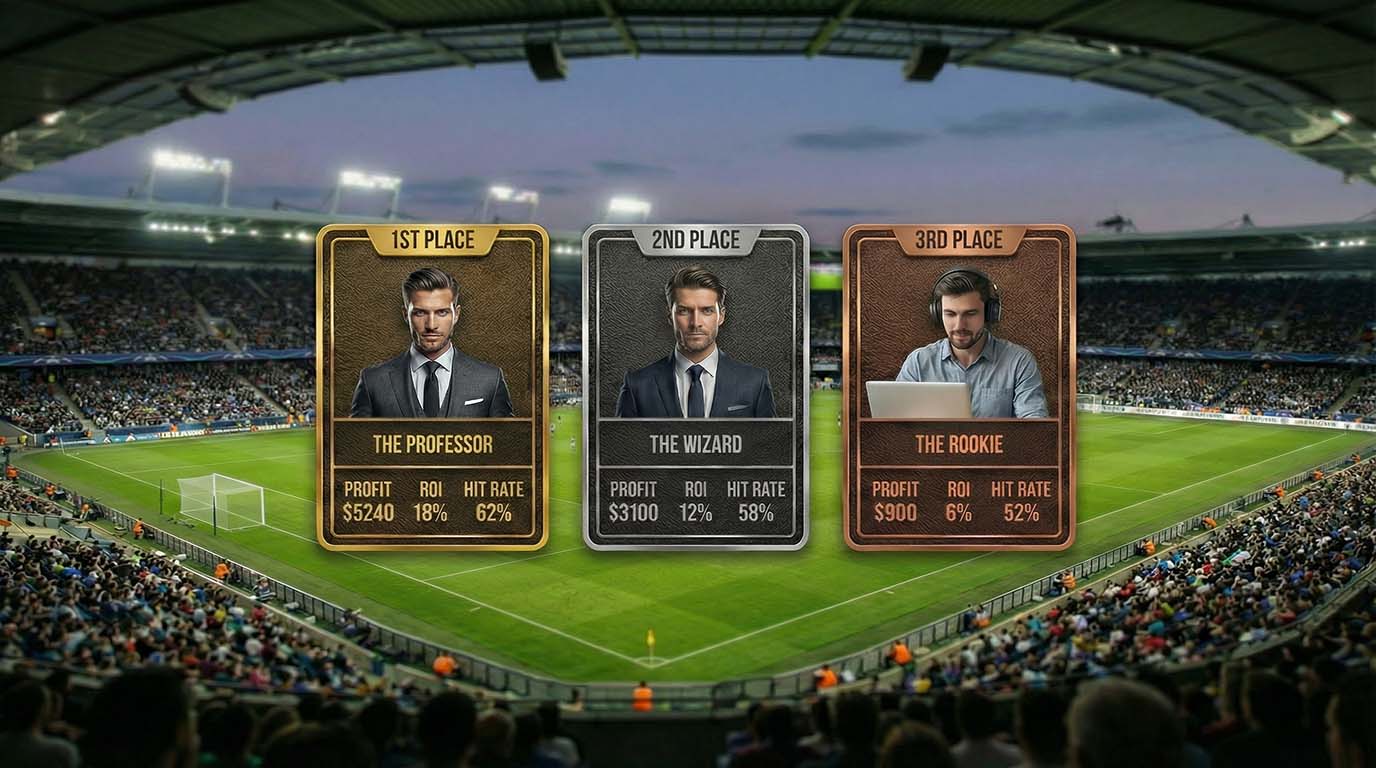
If you run a tipster page, a betting community, or a multi-tipster portal, you already know the hardest part: keeping people engaged between big wins.
People might visit once, read a post, maybe even place a bet — and then disappear for days. That’s not because your content is bad. It’s because most tipster sites feel “static.” They don’t give visitors a reason to return regularly.
This is where competitions and leaderboards change everything.
A good leaderboard makes progress visible. A good competition makes participation feel exciting and social. Together, they turn a tipster website from a simple “content page” into something that feels alive.
This guide explains, in simple language, how tipster competitions and leaderboards work, why they help you grow faster, and how to run them in a way that builds trust instead of drama.
What gamification really means (without buzzwords)
Gamification sounds complicated, but it’s a simple idea:
Make progress visible. Make participation rewarding.
That’s it.
In a tipster community, “progress” can be:
- Profit / units won
- ROI (return on investment)
- Win rate
- Streaks (winning streak, unbeaten streak)
- Consistency (weeks in profit)
- Activity (picks posted, days active)
A leaderboard is a public scoreboard that ranks tipsters by one clear metric.
A competition is a challenge with a start and end date, usually with a small reward or recognition.
You’re not turning betting into a game. You’re turning your community experience into something people want to return to.
Why tipster competitions work so well
1) They increase return visits
If people know rankings update weekly (or monthly), they come back.
Even when they don’t bet that day, they check standings. This habit improves:
- engagement
- retention
- trust
- subscription likelihood
The leaderboard becomes a “reason to open the site.”
2) They build trust without hard selling
A transparent tipster leaderboard is proof.
Instead of saying “we’re the best,” your platform shows performance clearly. That reduces the biggest fear new users have:
“Are these results real?”
When stats are visible and consistent, people trust faster.
3) They motivate tipsters to stay consistent
If you run a multi-tipster portal, competitions create friendly pressure:
- Tipsters post more regularly
- Tipsters explain picks better
- Tipsters focus on long-term performance
- Tipsters care about their public profile
This upgrades the overall quality of your portal.
4) They create content automatically
Competitions generate weekly content ideas like:
- Top 10 tipsters this week
- Biggest movers (up/down in ranking)
- Best ROI last 30 days
- Most consistent tipster this season
- Rookie of the month
That content can be used for blog posts, newsletters, and social media.
Leaderboards: the simplest growth feature you can add
A leaderboard is a list that ranks tipsters by a rule.
The best leaderboards share three qualities:
Clear metric
Pick one primary metric per leaderboard.
Examples:
- ROI % (great for comparing tipsters fairly)
- Units won / profit (simple and exciting)
- Win rate (easy to understand, but should not be the only metric)
If you want the simplest approach, start with profit/units.
If you want the fairest comparison, use ROI % with a minimum number of picks.
Clear time period
Always show a time range:
- Last 7 days
- Last 30 days
- This month
- This season
- All time
Time range matters because “all time” favors older accounts. “Last 30 days” gives newer tipsters a fair chance.
Clear rules
To keep the leaderboard fair, use basic rules such as:
- Minimum number of picks (example: 20 picks in last 30 days)
- Allowed bet types (singles only vs. including combos)
- Same staking method (fixed units is easiest)
These rules prevent “one lucky bet” from topping the rankings.
Competition formats that are easy and effective
You don’t need complicated scoring systems. Start simple.
1) ROI Sprint (Last 30 days)
- Metric: ROI %
- Timeframe: rolling last 30 days
- Rule: minimum picks (example: 20)
- Why it works: rewards smart selection and consistency
This is one of the best formats for multi-tipster portals because it feels fair.
2) Profit Race (This month)
- Metric: profit / units won
- Timeframe: calendar month
- Rule: minimum picks + fixed staking rules
- Why it works: easy to understand and creates excitement
This is the “classic” scoreboard people love.
3) Consistency Challenge
- Metric: weeks in profit (or days in profit)
- Timeframe: 8–12 weeks
- Why it works: pushes tipsters away from reckless betting
If you want a serious, long-term brand, this format is excellent.
4) Streak Contest
- Metric: longest winning streak
- Timeframe: last 30 or 60 days
- Why it works: simple and shareable
Just be careful: streaks can encourage ultra-low odds. If you use streaks, display ROI too.
5) Rookie of the Month
- Metric: ROI or profit (only for new tipsters)
- Timeframe: first 30 days after signup
- Why it works: helps new creators feel seen and stay active
This is a huge unlock if you’re onboarding multiple tipsters.
Rewards: what to give winners (without spending big money)
Rewards don’t need to be expensive. The goal is status + visibility.
Rewards that work well:
- Winner badge on the profile (“Top 3 – January”)
- Featured spot on homepage
- Pinned post in your community
- Free month access (if you sell subscriptions)
- Discount code for membership
- Small cash prize (optional)
- Access to premium tools or features (optional)
In many communities, a visible badge and featured placement works better than cash because it lasts longer and builds reputation.
The multi-tipster portal path (why this is powerful differentiation)
Competitions are more than a “nice feature.” On a multi-tipster portal, they become a real growth engine. When multiple tipsters are ranked transparently, users don’t follow just one person — they follow the platform. If you’re building a hosted multi-tipster solution, a platform like OwnTheGame makes it easier to manage competitions, leaderboards, and subscriptions in one place.
Here’s the path:
- You onboard multiple tipsters
- You track picks and stats in the same format
- You publish a transparent tipster leaderboard
- You run recurring competitions (weekly/monthly/seasonal)
- Your portal becomes the destination, not just one tipster
This solves a common problem: if one tipster takes a break, your whole site doesn’t go quiet. The platform stays active because others keep posting and competing.
It also changes your marketing story. You’re no longer “another tipster page.” You’re a place where tipsters are ranked transparently and consistently, in public.
How to run your first competition (simple step-by-step)
You can launch your first competition quickly if you keep it simple.
Step 1: Choose one metric
Pick either ROI % or profit/units.
- If your audience is more casual: profit/units is easiest
- If your audience compares tipsters seriously: ROI % is often better
Step 2: Choose one time window
Start with:
- Last 30 days (rolling) or
- This month (fixed)
Rolling windows keep it always “live.” Fixed windows create a clear finish line at the end of the month.
Step 3: Set fairness rules
Keep rules short and clear, for example:
- Minimum 20 picks
- Fixed staking (example: 1 unit per pick)
- No edits after posting (or edits tracked)
The goal is to prevent arguments and keep trust high.
Step 4: Make it visible
Visibility is everything. You should have:
- A dedicated leaderboard page
- A small leaderboard section on the homepage (top 3 or top 5)
- A short rules section near the leaderboard
If users must “dig” for the rankings, engagement drops.
Step 5: Announce it clearly
A good announcement includes:
- What the competition is
- When it starts/ends (or rolling window)
- What metric decides the winner
- What winners get
- Link to the leaderboard
Short, clear, and confident.
Step 6: Post regular updates
Consistency beats frequency.
A great schedule is:
- Weekly update (same day every week)
- Final update (end of month)
Each update becomes content for social media and email.
Common mistakes (and how to avoid them)
Mistake 1: Too many metrics
If people don’t understand how winners are chosen, they won’t care.
Start with one metric. Add more later.
Mistake 2: No minimum pick requirement
Without a minimum, one lucky bet can top the leaderboard.
Use a minimum pick count to keep rankings fair.
Mistake 3: Hiding rules in a long paragraph
Rules should be short bullet points near the leaderboard, not buried in text.
Mistake 4: Only “all-time” rankings
All-time is fine, but it can feel hopeless for new tipsters.
Include at least one recent leaderboard like “Last 30 days” so new accounts can climb.
Mistake 5: Leaderboard exists, but nobody sees it
If the leaderboard is not shown on the homepage (or dashboard), it won’t drive return visits.
Show the top 3 (or top 5) where everyone can see it.
FAQ
Do competitions encourage risky betting?
They can if you only reward profit. To keep things healthy, use ROI, minimum picks, and simple staking rules.
What’s the best leaderboard metric?
For fair comparison across tipsters: ROI % + minimum picks.
For simplicity: profit/units.
How often should I run competitions?
Monthly is a perfect start. After that, you can add weekly mini-rankings or seasonal challenges.
Can competitions work with a small community?
Yes. Even 5–10 active tipsters is enough. In smaller communities, recognition matters even more.
Run your own competitions
If you want faster growth, don’t rely on random spikes from one big win or one viral post. Build a system that keeps users coming back.
Start simple:
- Choose one leaderboard metric
- Choose a timeframe
- Publish rankings transparently
- Offer a badge or featured spot
- Repeat consistently
That’s how a tipster page becomes a community — and how a community becomes a platform.